Sachsenhausen Concentration Camp
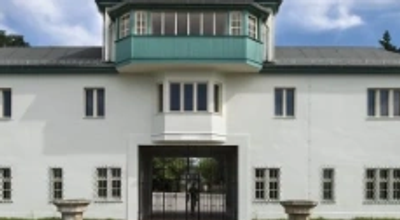
Overview
Sachsenhausen was a Nazi concentration camp used primarily to imprison political opponents, and later Jews, Soviet POWs, and other targeted groups; it also served as the administrative center for the entire concentration camp system and a training site for SS personnel. It is located in Oranienburg, about 35 km north of Berlin, Germany.
History
Sachsenhausen was built in 1936 by prisoners relocated from earlier camps in the Oranienburg area. Its triangular layout was designed as an architectural embodiment of total SS control, allowing guards to surveil the entire prisoner population from a single point at the base of the triangle. From 1938 onward, the SS Inspectorate of Concentration Camps was headquartered adjacent to the camp, making Sachsenhausen the operational hub from which the wider camp network was administered.
Early prisoners were largely political opponents of the regime—communists, social democrats, and others deemed enemies of the state—alongside so-called "asocials," criminals, Jehovah's Witnesses, and homosexuals. After the November 1938 Kristallnacht pogrom, thousands of Jews were imprisoned there. During the war the prisoner population expanded enormously to include Soviet POWs, resistance fighters, and forced laborers from across occupied Europe. Conditions were lethal: starvation, disease, forced labor, medical experiments, and executions killed tens of thousands. A dedicated killing facility known as "Station Z" was used for mass shootings and gassings, and in autumn 1941 an estimated 10,000+ Soviet prisoners of war were murdered there in a systematic shooting operation.
The camp also housed one of history's largest counterfeiting operations, "Operation Bernhard," in which imprisoned specialists were forced to forge British banknotes to destabilize the enemy economy. As Soviet forces advanced in April 1945, the SS forced roughly 33,000 prisoners on a death march northwest; thousands died from exhaustion, starvation, or execution before liberation. Soviet and Polish troops liberated the camp on April 22–23, 1945, finding several thousand prisoners too sick to have been marched out.
After the war the site did not cease to function as a place of imprisonment. From 1945 to 1950 the Soviet occupation authorities operated it as Special Camp No. 7 (later No. 1), interning former Nazi functionaries but also political detainees; roughly 12,000 people died there under those conditions. In 1961 East Germany established a memorial on the site, and today it operates as the Sachsenhausen Memorial and Museum documenting both the Nazi and Soviet-era histories.